

Hey there! As a supplier of Fiber Cutters, I often get asked about the cutting speed variation of these nifty tools. So, let's dive right in and explore what causes this variation and how it impacts your work.
First off, what exactly is cutting speed variation? Well, it's the difference in how fast a fiber cutter can slice through optical fibers. This speed can change based on a bunch of factors, and understanding them is crucial for getting the most out of your fiber cutter.
One of the main factors affecting cutting speed is the type of fiber being cut. Different fibers have different properties, like thickness and material composition. For instance, single - mode fibers are typically thinner than multi - mode fibers. When cutting single - mode fibers, the fiber cutter can often work at a relatively faster speed because there's less material to cut through. On the other hand, multi - mode fibers, with their larger diameters, might slow down the cutting process a bit.
The quality of the fiber also plays a big role. If the fiber has impurities or is damaged in some way, the cutter has to work harder to make a clean cut. This can lead to a decrease in cutting speed. A high - quality, pristine fiber will generally allow the cutter to operate at its optimal speed.
Another significant factor is the blade of the fiber cutter. Over time, the blade can wear out. A sharp blade can make quick and clean cuts, enabling the cutter to work at a faster pace. But as the blade dulls, it takes more time and force to cut through the fiber, resulting in a slower cutting speed. Regularly replacing the blade is essential to maintain consistent cutting speed. You can learn more about different types of fiber cutters on our website, such as the Cleaver Optical Fiber, which is designed with high - quality blades for efficient cutting.
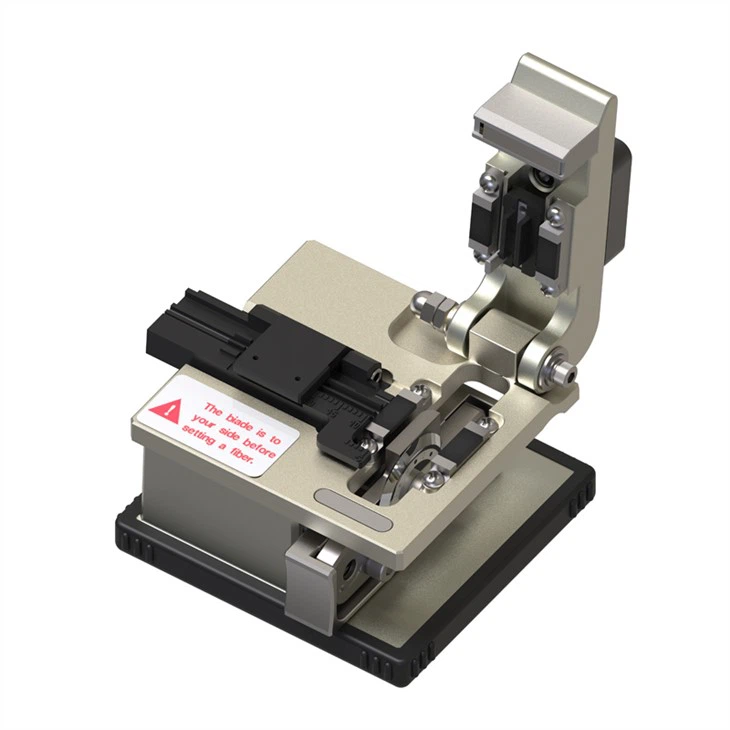

The settings of the fiber cutter also matter. Most modern fiber cutters come with adjustable settings. You can set the cutter to make different types of cuts, like straight cuts or angled cuts. Some settings might require more precision, which can slow down the cutting speed. For example, an angled cut needs to be made with great accuracy, so the cutter will operate more slowly to ensure the correct angle.
The operator's skill level can't be overlooked either. An experienced operator knows how to handle the fiber cutter properly. They can load the fiber correctly, adjust the settings as needed, and keep the cutter in good working condition. A novice operator, on the other hand, might make mistakes that slow down the cutting process. They could misplace the fiber, set the wrong parameters, or not maintain the cutter well.
Now, let's talk about why cutting speed variation is important. In a production environment, time is money. If the cutting speed is inconsistent, it can disrupt the workflow. For example, if you're making a large number of fiber optic cables, a sudden drop in cutting speed can cause delays in the production line. This can lead to missed deadlines and unhappy customers.
On the other hand, if you can optimize the cutting speed, you can increase productivity. By understanding the factors that affect cutting speed and taking steps to control them, you can make the most of your fiber cutter. For instance, using high - quality fibers, regularly replacing the blade, and training your operators well can all contribute to a more consistent and faster cutting speed.
When it comes to choosing a fiber cutter, you want one that offers good control over cutting speed. Our Simple Optical Fiber Cutter is a great option for those who need a straightforward and efficient cutting solution. It's easy to operate and can provide a relatively stable cutting speed.
The Optical Fiber Cleaver is another top - notch product. It's designed with advanced technology that allows for precise control of cutting speed. Whether you're working on small - scale projects or large - scale production, this cleaver can adapt to your needs.
In conclusion, the cutting speed variation of a fiber cutter is influenced by multiple factors, including the type and quality of the fiber, the condition of the blade, the cutter settings, and the operator's skill. By being aware of these factors, you can take steps to optimize the cutting speed and improve your productivity.
If you're in the market for a reliable fiber cutter or want to learn more about how to manage cutting speed variation, don't hesitate to reach out. We're here to help you find the best solution for your fiber - cutting needs. Whether you're a small business or a large corporation, we have the products and expertise to support you.
References
- Industry reports on fiber optic manufacturing
- Technical specifications of fiber cutters
So, if you're interested in discussing your fiber - cutter requirements or have any questions, just get in touch. We're looking forward to working with you to enhance your fiber - cutting operations.


