

As a supplier of Fiber Case Tools, I am often asked about the heat dissipation performance of these tools. In this blog post, I will delve into the heat dissipation aspects of Fiber Case Tools, exploring how it impacts their functionality, reliability, and overall performance.
Understanding the Importance of Heat Dissipation in Fiber Case Tools
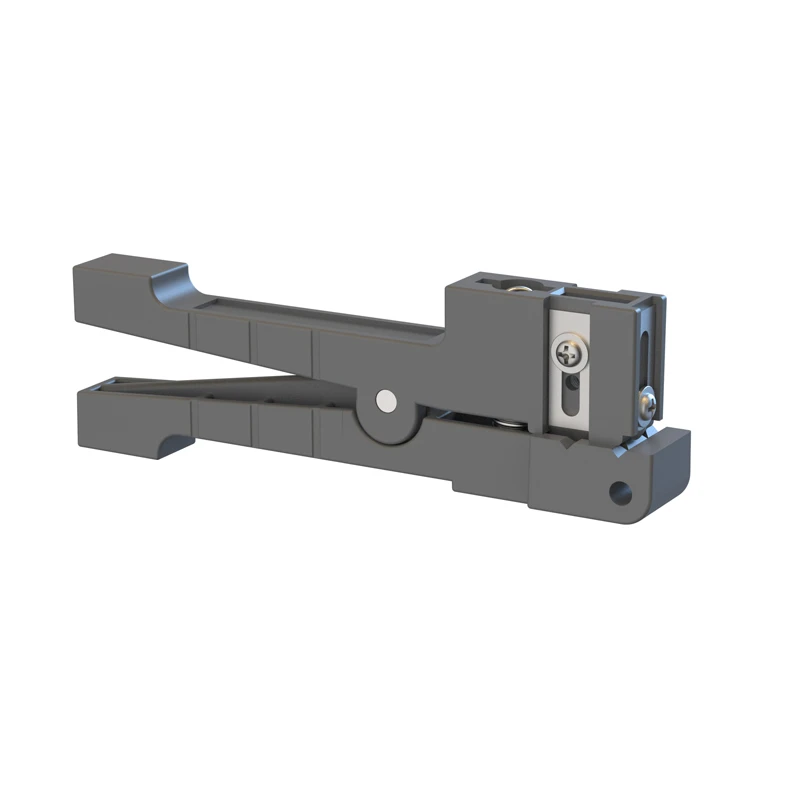
Fiber Case Tools, such as the Optical Cable Slitter Wire Stripper, Fiber Optic Cable Stripper, and Transverse Span Slitter, are designed to perform precise and demanding tasks in the fiber optic industry. These tools often operate under continuous use, which can generate a significant amount of heat.
Heat dissipation is crucial for several reasons. Firstly, excessive heat can cause components within the tool to expand, leading to mechanical stress and potential damage. This can result in reduced accuracy and reliability of the tool, which is unacceptable in the high - precision fiber optic field. Secondly, high temperatures can degrade the performance of electronic components, such as sensors and controllers, which are often integrated into modern Fiber Case Tools. This degradation can lead to errors in measurement, control, and operation, affecting the quality of the work being done.
Factors Affecting Heat Dissipation in Fiber Case Tools
Material Selection
The materials used in the construction of Fiber Case Tools play a vital role in heat dissipation. Metals, such as aluminum, are commonly used due to their high thermal conductivity. Aluminum can quickly transfer heat from the internal components of the tool to the outer surface, where it can be dissipated into the surrounding environment. On the other hand, plastics, which are often used for their lightweight and insulating properties, have relatively low thermal conductivity. However, some advanced plastics can be engineered with additives to improve their heat - dissipation capabilities.
Design and Structure
The design of the tool also has a significant impact on heat dissipation. A well - designed tool will have a large surface area exposed to the air, allowing for more efficient heat transfer. For example, some Fiber Case Tools are designed with fins or ridges on the outer surface. These features increase the surface area available for heat dissipation, enhancing the tool's ability to cool down. Additionally, the internal layout of the tool can affect heat flow. Components that generate a lot of heat should be placed in areas where they can be easily cooled, and there should be proper ventilation channels to allow air to circulate freely.
Operating Conditions
The operating conditions of the tool can also influence its heat dissipation performance. Tools that are used in high - temperature environments will naturally have a harder time dissipating heat. Similarly, tools that are used continuously for long periods without breaks will generate more heat and may not have enough time to cool down. In such cases, additional cooling measures, such as fans or heat sinks, may be required to maintain the tool's temperature within an acceptable range.
Measuring Heat Dissipation Performance
To accurately assess the heat dissipation performance of Fiber Case Tools, several methods can be used. One common approach is to measure the temperature of the tool's surface and internal components during operation. Infrared thermography is a non - contact method that can quickly and accurately measure the surface temperature distribution of the tool. This technique can help identify hot spots, which are areas where heat is not being dissipated effectively.
Another method is to measure the power consumption of the tool. An increase in power consumption can sometimes indicate that the tool is working harder due to overheating. By monitoring the power consumption over time, it is possible to detect any abnormal increases, which may suggest a problem with heat dissipation.

Improving Heat Dissipation in Fiber Case Tools
Enhanced Cooling Systems
As mentioned earlier, additional cooling systems can be added to improve heat dissipation. Fans are a simple and effective way to increase air circulation around the tool. They can be either internal or external. Internal fans are integrated into the tool's design and can be used to blow air directly over the hot components. External fans can be placed near the tool to provide additional cooling.
Heat sinks are another popular cooling solution. A heat sink is a passive device that absorbs heat from the tool and dissipates it into the air. Heat sinks are usually made of materials with high thermal conductivity, such as copper or aluminum, and are designed with a large surface area to maximize heat transfer.
Optimized Design and Manufacturing
Manufacturers can also optimize the design and manufacturing process to improve heat dissipation. This can involve using better - quality materials, improving the internal layout of the tool, and increasing the surface area for heat transfer. For example, some manufacturers are now using 3D printing technology to create complex internal structures that can enhance air circulation and heat dissipation.
The Impact of Heat Dissipation on Tool Longevity and Performance
Proper heat dissipation is essential for the longevity and performance of Fiber Case Tools. By keeping the tool's temperature within an acceptable range, the risk of component failure is reduced. This means that the tool will have a longer lifespan and require less maintenance.
In terms of performance, a tool with good heat dissipation will operate more consistently and accurately. There will be fewer errors due to component degradation, and the tool will be able to perform at its best for longer periods. This is particularly important in the fiber optic industry, where precision and reliability are of utmost importance.
Conclusion
In conclusion, the heat dissipation performance of Fiber Case Tools is a critical factor that affects their functionality, reliability, and longevity. By understanding the factors that influence heat dissipation, measuring it accurately, and implementing appropriate measures to improve it, we can ensure that our Fiber Case Tools perform at their best.
If you are in the market for high - quality Fiber Case Tools with excellent heat dissipation performance, we are here to help. Our range of products, including the Optical Cable Slitter Wire Stripper, Fiber Optic Cable Stripper, and Transverse Span Slitter, are designed with heat dissipation in mind. Contact us today to discuss your specific needs and explore how our tools can meet your requirements.
References
- "Thermal Management in Electronic Devices and Systems" by Avram Bar - Cohen, et al.
- "Materials Science and Engineering: An Introduction" by William D. Callister, Jr. and David G. Rethwisch.


